
[RE-POST] On Virginity
Exploring Some of Our Favorite Posts in the Magdalene Tradition

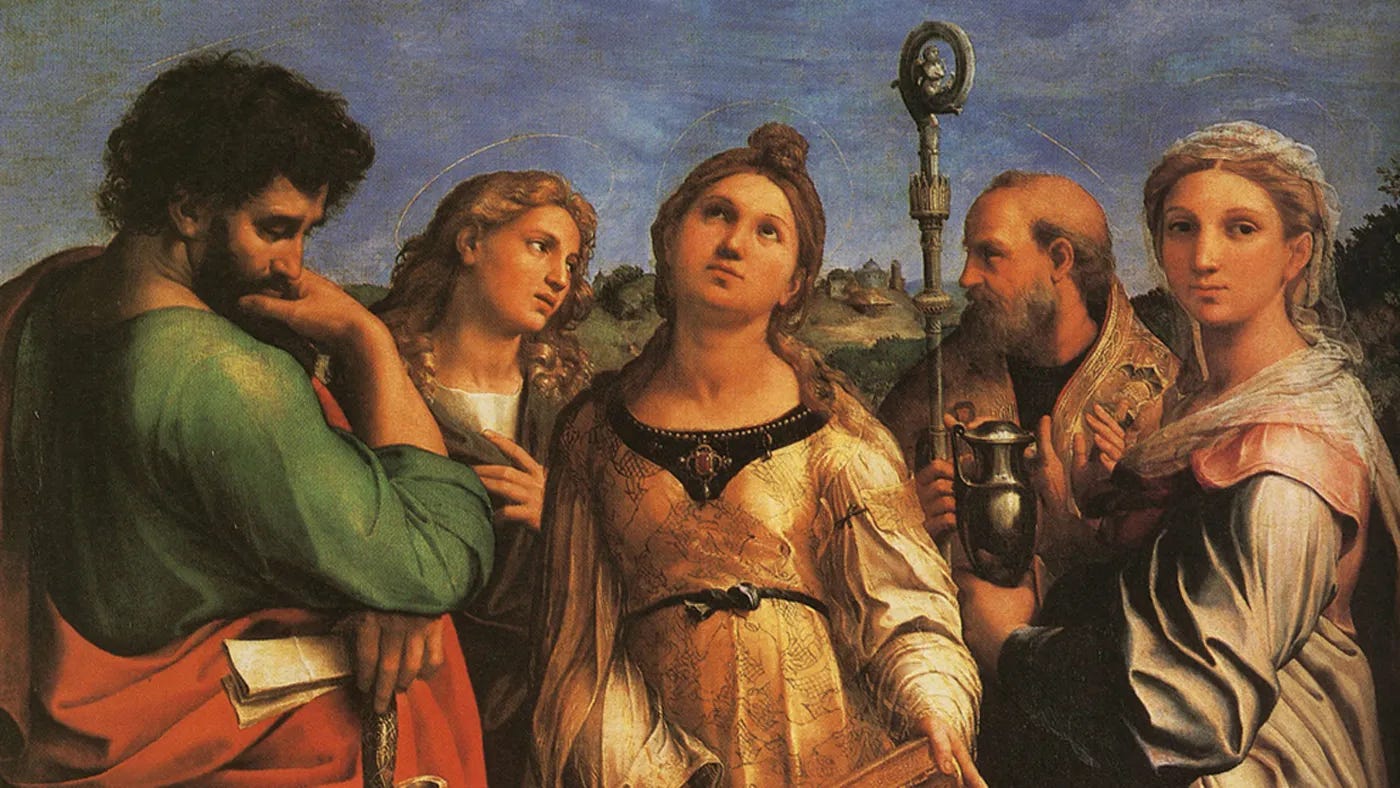
Let’s begin with the obvious: Virginity is a social construct. It is completely made up and devoid of any actual substance. It is not a fixed state, nor does it hold any inherent moral content.
But, boy oh boy, has it been a subject of intense debate throughout history. Especially in religious circles.
In the simplest terms, the modern definition of virginity is a state of never having had sexual intercourse, specifically heteronormative penetrative intercourse. But as with so many things, the constraints of this definition are most often placed on girls and women. In that case, virginity is often associated with an intact hymen, and is thought to prove some measure of “purity.”
Which is all utter nonsense.
If you’re here, you probably understand that standards of virginity are arbitrary. The hymen membrane can be ruptured at any point in life by anything from bike riding to vigorous exercise to medical exams. And plenty of sexual activity exists outside the realm of penetrative sexual intercourse, and plenty of people partake. Virginity, in our current understanding, means almost nothing.
But oh, the angst people have about such a flimsy concept.
Teenagers walking the line of normal sexual curiosity and desires for sexual “purity,” engaging in acts to preserve their virginity that may actually be more risky than intercourse. The Mormon young people’s practice of “soaking,” which supposedly preserves virginity on a technicality. And the awful, invasive practice of hymen check on one’s wedding night, still common in some religious circles.
Our modern definition of virginity looks nothing like its ancient origins. In fact, in some ways, it is the exact opposite. In order to explore that, let’s explore virginity through two lenses. For the first, we’ll return to where we started last week, with Paul’s writings and their impact on early Christians. And for the second, we’ll explore concepts that are much, much older.
Now about virgins: I have no command from the Lord, but I give a judgment as one who by the Lord’s mercy is trustworthy. Because of the present crisis, I think that it is good for a man to remain as he is. Are you pledged to a woman? Do not seek to be released. Are you free from such a commitment? Do not look for a wife. But if you do marry, you have not sinned; and if a virgin marries, she has not sinned. But those who marry will face many troubles in this life, and I want to spare you this.
I would like you to be free from concern. An unmarried man is concerned about the Lord’s affairs—how he can please the Lord. But a married man is concerned about the affairs of this world—how he can please his wife—and his interests are divided. An unmarried woman or virgin is concerned about the Lord’s affairs: Her aim is to be devoted to the Lord in both body and spirit. But a married woman is concerned about the affairs of this world—how she can please her husband. I am saying this for your own good, not to restrict you, but that you may live in a right way in undivided devotion to the Lord.
- 1 Corinthians 7:25-28, 32-35
As I wrote about last week, Paul was largely anti-sex, not because he thought sex was immoral, but because he felt sex was a distraction from Christ’s impending (in his belief) return. In the above passage in 1 Corinthians, he advises people who are virgins—meaning unmarried—to remain so, but goes on to say that any virgin who does marry does not sin. He makes his case by saying that an unmarried person is free to focus entirely on the Lord, rather than the concerns of their spouse. Again, Paul’s only investment in virginity is the freedom it gives the person to focus on their faith as a near full-time occupation.
Paul’s admonitions had an interesting impact on the women of early Christian communities. Women in those days often outlived their husbands, which is why so much scripture focuses on the care of widows in a community. In large part due to Paul’s letters to those early churches, widowed women felt free to declare themselves virgins in the eyes of the Lord, refusing to remarry because Christ would return any day. This practice of “re-virgining” oneself allowed women to function as the head of their own household. The early Christ movement saw a boom in widowed women owning property and starting businesses, which would have been radical but wholly justified by their religious beliefs. They would have had the support of their church communities who similarly felt that re-marriage would distract them from Christ’s return.
And these women had major incentives to stay single. Marriage in those days was a form of ownership, with a wife expected to devote her entire day to running a household and serving her husband. Widowed women who remarried were often seen as less desirable than first-time wives, which was used to justify neglect and abuse. And so, widowed Christian women utilized the loophole of Paul’s anti-sex emphasis to declare themselves free from patriarchal ownership through marriage.
They were owned by no one but themselves.
And so, when we read the word “virgin” in scripture, especially in the New Testament, it is important to remember that the word is less about sexual engagement and more about autonomy. The “virgins” of the early church were simply reclaiming themselves.
The word “virgin” predates Paul’s writings by centuries. Scholars estimate its first use to be anywhere from five thousand to ten thousand years old. This long history of usage demonstrates how ancient our focus on our own sex lives truly is.
The word “virgin” was initially used in reference to pagan priestesses. Holy women as far back as Enheduanna and beyond were called “virgins,” a word that denoted their status as “set apart” from everyday society, due to their calling to serve gods and goddesses, rather than to be wives and mothers. In this context, a virgin was not merely someone who had not yet had sexual intercourse, but rather referred explicitly to women who were not “owned” by any man. They were women in possession of themselves, or women wholly possessed by the divine..
Virginity in Early Antiquity was a status symbol of sorts, but not because of its association with purity, but rather for its association with vocation. Priestesses were not expected to remain virgins because of some moral imperative but rather because sexual activity, romantic relationships, and child-rearing would divert their energy from tending full-time to their deities. Much like Paul, they viewed sex not as a sin but as a distraction.
The greatest theological shift in history—one that we will explore in more detail in the future—is the transition from matriarchal polytheism to patriarchal monotheism. Somewhere in this shift, virginity became less about possession of oneself and more about the possession of one spouse by another. Virginity became a requirement for marriage—one fiercely monitored and strictly enforced—as intercourse became more associated with dominance and possession. Virginity was no longer about vocational and divine status, but ownership status.
Like so many things in the feminist history of religion, I grieve this shift, as virginity became associated with worth as an object rather than freedom as one’s own subject. Like many of you, I grew up in a time when girls agonized over their virginity status, believing it made them worthy of marriage, not knowing the history of holy women who used to claim the same status.
How much harm has been done over a word that used to have so much power, as the word virgin ceased meaning “priestess” and came to mean “property”?
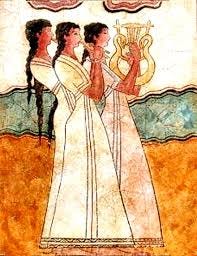
I started with an obvious statement and will end with one, as well: Virginity, as we understand it today, was made up to enforce notions of sexual ownership of women. Moreover, it was created to put the onus of sexual ethics and loyalty squarely on the shoulders of women, effectively absolving men of responsibility.
The idea that a physical encounter with another person can fundamentally change one’s identity is not only ludacris, it is highly manipulative. It is, as so many things are, a tool for control through guilt.
Virginity is nothing.
But one’s personal freedom is everything.
Thank you so much for reading! Next week, we’ll have one more re-post of an old favorite as Melissa wraps up a busy season of travel. As promised, we’ll be back in June with a brand new series on Praying with the Gospel of Mary Magdalene. Thanks so much for all your support!
A point of view on the 1950's early 1960's training for girls to remain a virgin before marriage because if they weren't, 'no decent man will every want you.' Quite a shift from the Roaring 20's, but having nothing to do with religion or ownership, it seems to me a virgin might be a wife who had no knowledge of men sexually and so had nothing to compare their husband to...the organ itself or the performance. And those who aren't virgins have had the experience to know. The 'free love' of the late 60s and into the 70s, the women's movement, Cosmopolitan, etc., put an end to this teaching for most.