
The Flame Above
Communing with the Mystics, pt. 4

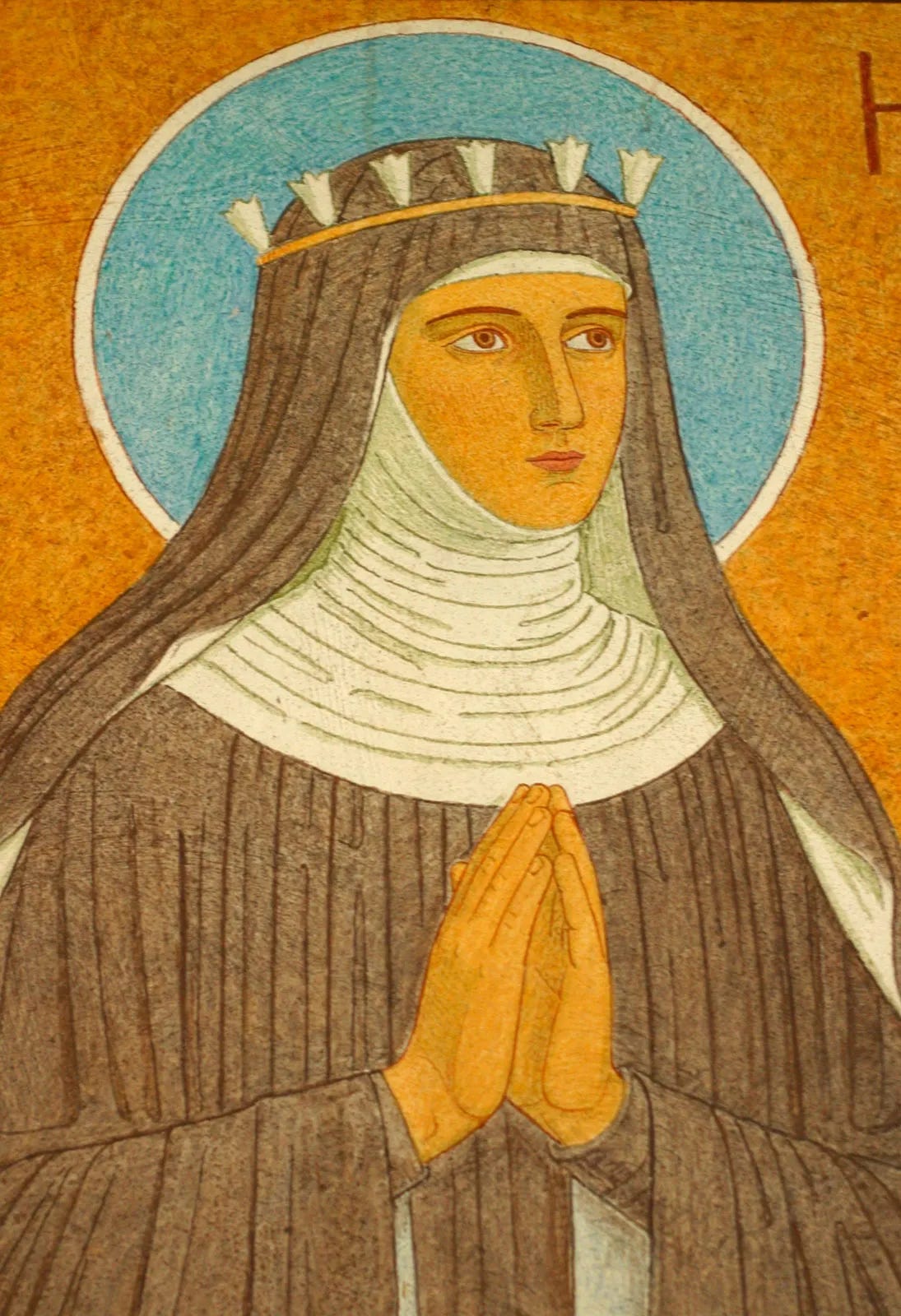
“I am the fiery life of the essence of God; I am the flame above the beauty in the fields; I shine in the waters; I burn in the sun, the moon, and the stars. And with the airy wind, I quicken all things vitally by an unseen, all-sustaining life.”
- Hildegard of Bingen
Historians and sociologists talk about a phenomenon that is relatively common in the modern world: We assume that ancient peoples weren’t as intelligent as we are today.
Much of this is a function of technology and scientific advancement. People from centuries past didn’t know how to cure certain diseases, harness the power of electricity, or understand the vastness of space, so we assume they must simply be lacking in IQ points. Surely if they were as smart as we are, they would have known all those things, right?
And yet, experts about ancient people assure us that the range of intelligence of generations post was the same as it is today, with most people of average intelligence, alongside outliers on either extreme.
And then there are the geniuses of the old world whose discoveries and writings influence us even today: Leonardo da Vinci, Zhang Heng, Albert Einstein.
And Hildegard of Bingen. Mystic, healer, musician, and so much more.
Today we wrap up our Mystics series with a woman who reminds us that both spiritual and intellectual genius have existed throughout time.
The extraordinary life of Hildegard of Bingen began centuries before any of the other mystics we’ve profiled here, in 1098 in Bermersheim, Germany. She is reported to have been the youngest of ten children—although only seven of her siblings’ names were recorded—of a family of low nobility and modest means. She reported experiencing visions from a very young age, which may have influenced her parents’ decision to give her to the church as a child.
At the age of eight, Hildegard left home to live with an anchoress named Jutta and serve as her maid and assistant. While Jutta was the holy woman from whom locals sought counsel and prayer, Hildegard lived as strict a religious life as her magistra, with limited outside contact and a daily life centered around prayer and devotion. Here, Hildegard received some modest education, although Jutta herself was not learned and could provide only the basics of reading and scriptural interpretation. Hildegard is said to have been schooled in Latin and other subjects by the women’s male confessor, who took a liking to the precocious young woman.
A small community of religious women sprang up around the anchoress Jutta, and when she died, the women unanimously elected Hildegard as their new magistra. Newly freed from her enclosure, Hildegard lobbied to church officials to be allowed to move the community to Rupertsberg, where they would have more room to grow and less scrutiny from both lay and religious authority. When her request was initially denied, Hildegard fell deathly ill, which she believed was God’s punishment for not moving the community where God wanted it to be. Ultimately, the archbishop relented, and Hildegard moved her sisters to the countryside, where the community grew and flourished.
In Rupertsburg, Hilegard’s writing and work flourished. She wrote three volumes of theology based on her visions, ranging from interpretations of the structure of the universe to the history of salvation to interactions with personified vices. Her theological work is sweeping and amongst the most diverse of any medieval mystic. She also penned texts about healing through both medicine and spiritual practice, works that some scholars say were significantly ahead of their time. And when she wasn’t busy with her academic writing, she composed over sixty pieces of music, most of them liturgical in nature. She also invented an alternative alphabet that could be used as a type of code, which she may have used for communications within her abbey.
Hildegard is not known only for her extraordinary and prolific work, but also for her relationship with one of the nuns who lived in her abbey, Richardis von Stade. The younger woman was identified as a close friend and personal assistant and may have helped her compile her gorgeous illustrated texts. But some scholars speculate there may have been more to the dynamic. When Richardis was elected abbess of another convent, Hildegard registered her disapproval via letters to church officials, the Pope, and Richardis’ family. She claimed it was “not God’s will” for them to be separated and lamented that she may not be able to continue her work without her. The protesting was for naught, as Richardis was moved and died only a year later. While impossible to verify, scholars have speculated that the two women may have had some sort of romantic relationship, making Hildegard beloved amongst LGBTQ Christians. Regardless, her passionate pleas to keep the other woman with her humanize her and give us compassion for the woman that she was.
Hildegard is not only revered in modern times, but was much respected in the church during her own life. In the 1140s, she received papal documents verifying her visions as legitimate and provided by the Holy Spirit. And it seems that many religious and lay persons, both male and female, sought her counsel about matters of spirit and politics. She lived a remarkably long life for the time, passing away around the age of 81. It was said that at the moment of her death, two beams of light crossed above her body.
While her canonization process was never completed, numerous Popes have referred to her as saint, and she is commemorated on her feast day of September 17th. She has been named a “Doctor of the Church” and garnered renewed interest by modern-day feminist scholars. Her prolific work in theology, medicine, and the arts reminds us of the many ways God’s grace shines on Earth.
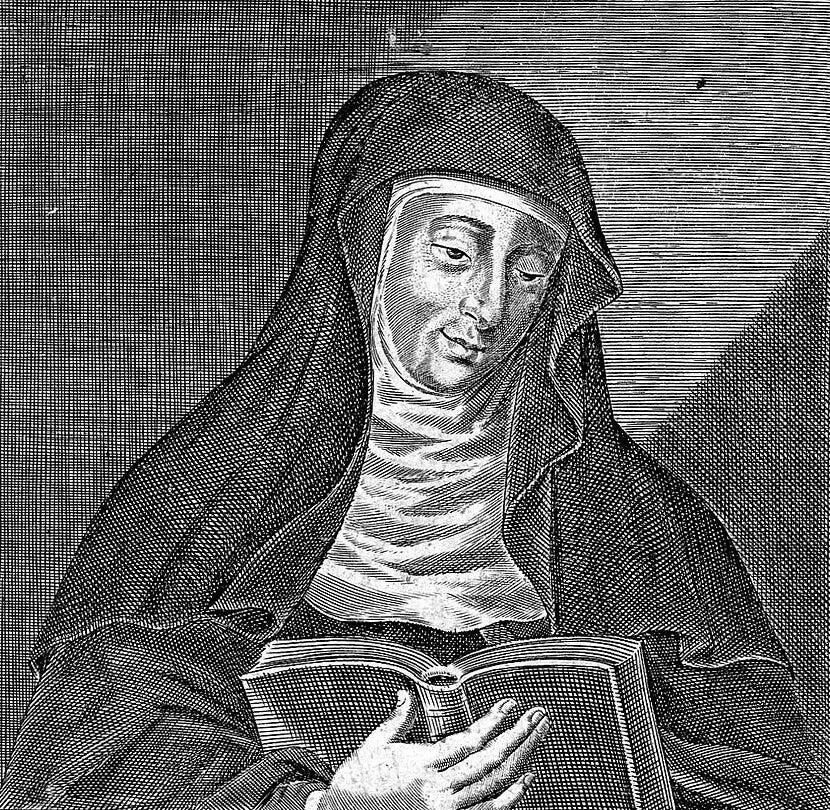
Hildegard of Bingen was many things. She was a theologian, a musician, and a healer. But most of all, she was a human being. She led fiercely, stood up for her beliefs, and vulnerably expressed her love for her dear Richardis. The fullness of Hildegard’s story reminds us of the tenderness of being a human in pursuit of the Divine. And she humbles us in her reminder that genius and brilliance existed long before the modern age.
May Hildegard and all the Mystics call us to gratitude for the spiritual adepts who led the way and light the path to God.
Thank you for reading! This concludes our series on Communing with the Mystics. Starting next week, we’ll start a month-long series on musings about Mary Magdalene that don’t fit neatly into any other category. This will be a fun series to wrap up the summer. Join us then!